
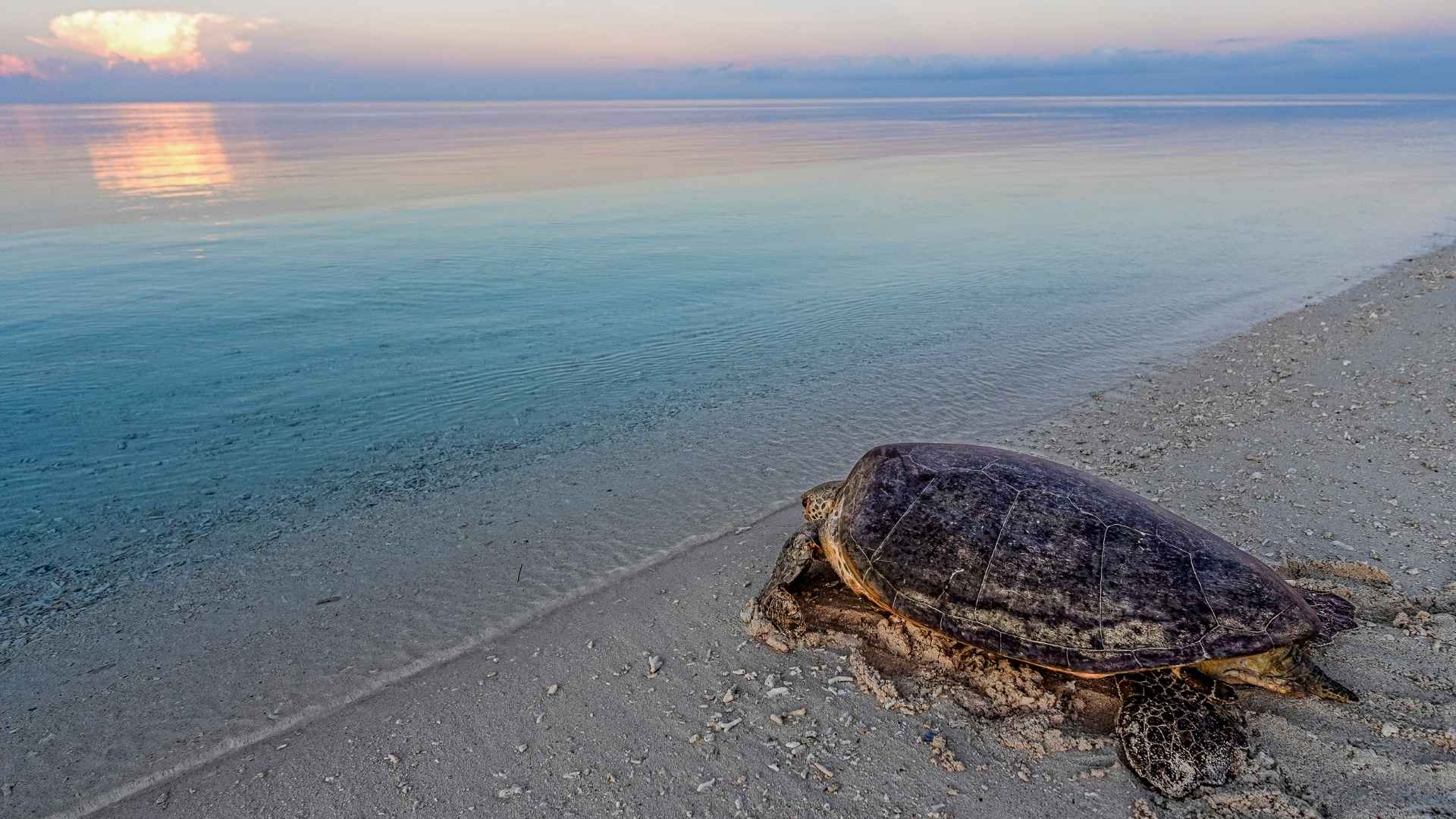
The International Union for Conservation of Nature (IUCN) has officially announced that the conservation status of the green sea turtle (Chelonia mydas) on the IUCN Red List has improved—from Endangered to Least Concern. Yayasan Penyu Indonesia welcomes this news with joy and gratitude to all parties who have contributed and fought for the protection of sea turtles.
About the Green Sea Turtle
The green sea turtle is a keystone species in tropical marine ecosystems, particularly in coral reef and seagrass bed areas. Their presence helps maintain ecological balance by consuming old seagrass leaves, stimulating the growth of new shoots, and keeping seagrass meadows healthy and productive.
Indirectly, this also supports coral reef conservation—since healthy seagrass beds act as natural filters that maintain water clarity around reefs, allowing corals to grow optimally.
Threats Still Exist!
According to IUCN data, the global population of green sea turtles has increased by about 28% since the 1970s. However, several subpopulations still face serious threats. In Indonesia, cases of poaching and illegal trade of green turtles and their eggs still occur. Green turtles are also frequently caught as bycatch in fishing activities, often resulting in their deaths. Not only the species but also their nesting habitats face damage from unsustainable coastal development that fails to consider environmental impacts.
Green Sea Turtles in Indonesia
Indonesia is one of the world’s most important nesting habitats for green sea turtles. Yayasan Penyu Indonesia (YPI) runs sea turtle protection programs on nine nesting beaches, with green turtles nesting on four of them.
Throughout the year, female green turtles regularly come ashore on Mataha Island and Bilang-bilangan Island to lay eggs. Each month, YPI rangers protect hundreds to thousands of turtle nests at these nesting sites. The islands are also home to hawksbill turtles, a species known for their beautiful shells.
Off the coast of Sumatra, YPI protects nesting female turtles on Salaut Besar Island and Lubuk Baik, Simeulue. Although the number of green turtles nesting there is much smaller than in Kalimantan, these sites remain highly significant—they serve as nesting grounds for four turtle species: green, hawksbill, olive ridley, and leatherback turtles.
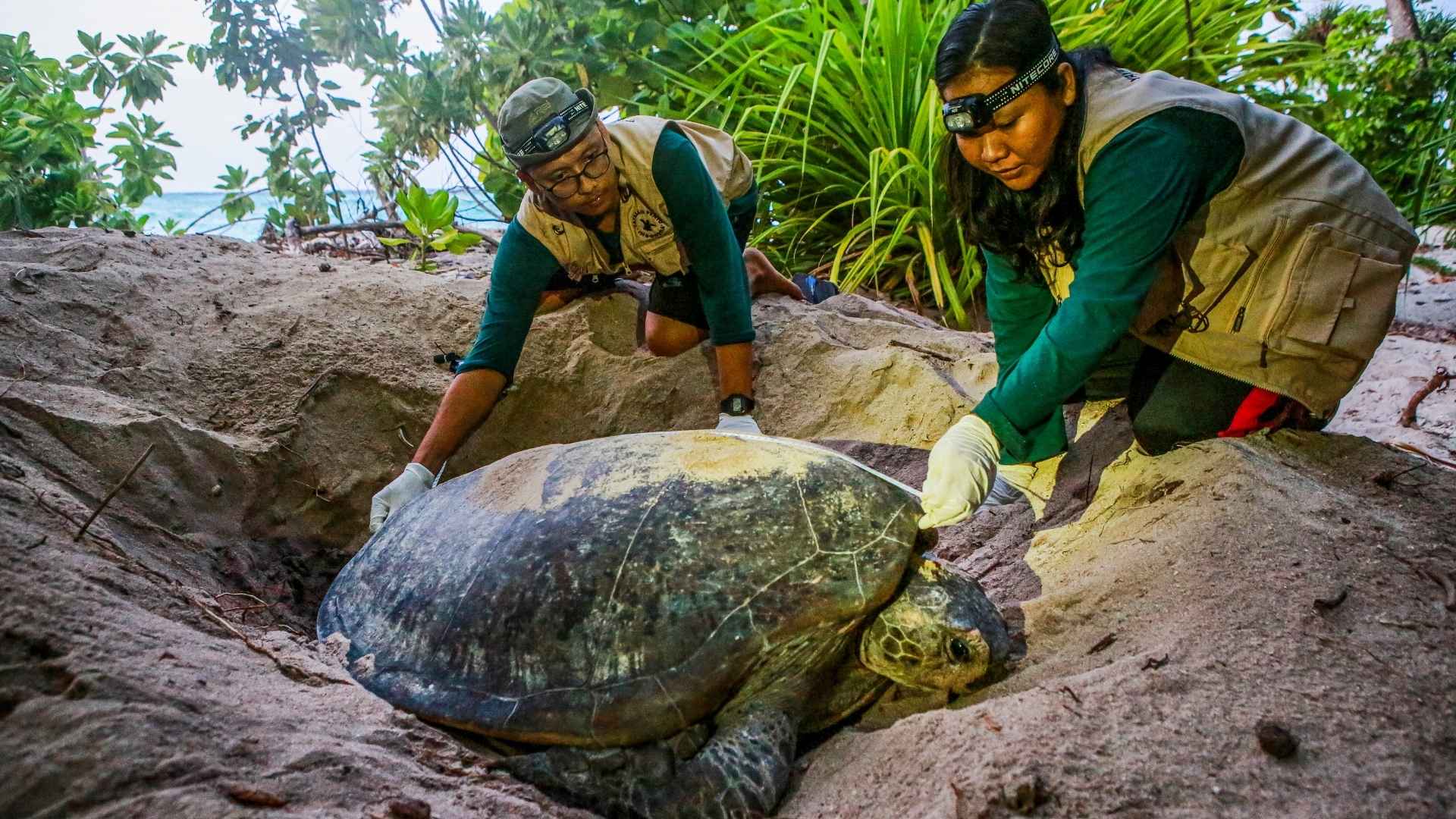
Imam and Amelia did data collection of nesting green turtles on Bilang-bilangan Island (Yayasan Penyu Indonesia/Perdiansyah)
In the first eight months of 2025, YPI has strive to protected 7,757 sea turtle nests, of which 7,566 were green turtle nests. Through regular patrols, beach clean-ups, data collection, hatchery management, and natural-cycle hatchling releases, YPI continues its commitment to protecting sea turtles and their habitats.
The foundation also invites everyone to participate in conservation efforts in ways that suit their backgrounds and expertise. When communities, governments, and organizations unite to protect biodiversity, real impact can be achieved.
A Conservation Win Story
According to Roderic Mast, Co-Chair of the IUCN Marine Turtle Specialist Group, the global recovery of green sea turtles is a strong example of successful international conservation coordination. He also emphasized that conservation efforts should not only focus on saving sea turtles but must also ensure the preservation of the marine and coastal ecosystems on which they depend. “Sea turtles cannot survive without healthy oceans and coasts—and neither can humans,” said Roderic Mast, quoted from Down To Earth.
The improvement of the green sea turtle’s conservation status marks a significant wins for global sea turtle conservation. However, the journey is far from over—the work to maintain stable populations has only just begun. There are still many opportunities to strengthen protection for other vulnerable and endangered species. Let us continue to uphold our commitment to conservation and take real action, starting with our everyday lives.

