
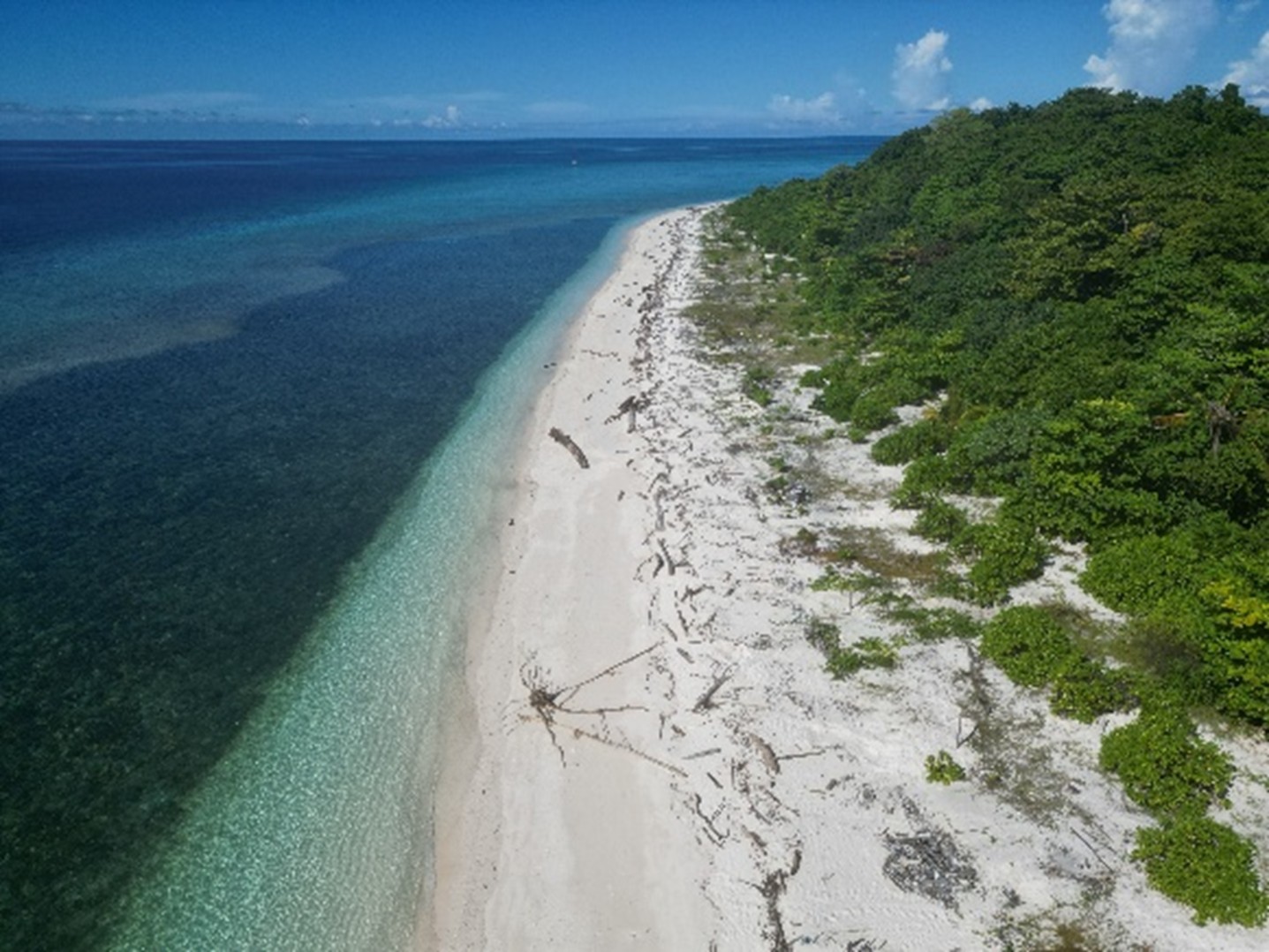
Bilang-bilangan Island and Mataha Island are two small uninhabited islands whose coastal areas serve as one of the largest nesting habitats for Green Turtles and Hawksbill Turtles in Berau Regency, East Kalimantan.
Bilang-bilangan Island is located in Batu Putih District, Berau Regency, with an area of approximately 131 hectares. The island is designated as a core zone of the Derawan Islands and Surrounding Waters Coastal and Small Islands Conservation Area (KKP3K-KDPS), as stipulated in the Decree of the Minister of Marine Affairs and Fisheries of the Republic of Indonesia Number 87/KEPMEN-KP/2016 concerning the Establishment of the Derawan Islands and Surrounding Waters Coastal and Small Islands Conservation Area in Berau Regency, East Kalimantan Province.
As a core zone, Bilang-bilangan Island functions to protect marine biodiversity and surrounding coastal ecosystems. Therefore, activities such as fishing, aquaculture, and tourism are not permitted in this area. The area may only be used for conservation, research, and educational activities that support environmental preservation efforts.
Meanwhile, Mataha Island, located adjacent to Bilang-bilangan Island, has an area of approximately 389 hectares. Mataha Island is also designated as a core zone within the KKP3K-KDPS and is subject to the same management regulations as Bilang-bilangan Island.
Although Bilang-bilangan Island and Mataha Island have been designated as core zones, various disturbances still threaten the survival of sea turtles. These disturbances originate from human activities (anthropogenic disturbances) as well as natural factors (natural disturbances).
Disturbances caused by human activities (anthropogenic disturbances) include turtle egg poaching, turtle hunting, fish bombing, fish poisoning, plastic waste pollution, oil spills, and other destructive activities.
In addition to human-induced disturbances, natural factors (natural disturbances) also have the potential to affect turtle conservation. These include rats preying on hatchlings. Coastal erosion can damage nests and cause turtle eggs to fail to develop. Furthermore, large logs drifting onto nesting beaches may disrupt turtle nesting activities.
Marine debris that washes up on turtle nesting beaches poses a serious threat to turtles. Bilang-bilangan Island and Mataha Island frequently receive plastic waste and driftwood originating from various regions of Indonesia, and even from other countries such as Malaysia and the Philippines. This is particularly concerning given that both islands are located tens of miles offshore in the open sea.
Plastic debris floating in the ocean is often mistaken by turtles for jellyfish, one of their primary food sources. Marine debris is a serious threat to life on Earth, especially to sea turtles. Currently, six of the world’s seven sea turtle species can be found in Indonesia: the Green Turtle (Chelonia mydas), Hawksbill Turtle (Eretmochelys imbricata), Leatherback Turtle (Dermochelys coriacea), Olive Ridley Turtle (Lepidochelys olivacea), Loggerhead Turtle (Caretta caretta), and Flatback Turtle (Natator depressus). Sea turtles are endangered species and must be protected collectively.
Large logs lying across nesting beaches cause many turtles to turn back to the sea without laying eggs, a phenomenon known as a false crawl (FC). This occurs because turtles are highly sensitive to obstacles in their path. As a result, turtles return to the ocean and search for another, safer nesting location.
One of the efforts carried out by YPI rangers on Bilang-bilangan Island and Mataha Island to reduce threats to turtles is conducting routine beach clean-up activities along turtle nesting beaches.
Every afternoon, rangers remove driftwood that has washed ashore. The total length of coastline routinely cleaned is approximately 2 km on Bilang-bilangan Island and 2.2 km on Mataha Island. Large pieces of driftwood are cut into smaller sections to facilitate removal and are collected at a single location so as not to interfere with turtle nesting processes.
Once the driftwood has been gathered at one point, YPI rangers conduct controlled burning in the morning. Due to limited waste management facilities on Bilang-bilangan Island and Mataha Island, burning driftwood is currently the only available option. It is hoped that alternative and more environmentally friendly waste management solutions can be implemented in the future.
Burning is carried out in the morning to ensure the fire can be controlled and fully extinguished by the afternoon. Rangers ensure that all flames and embers are completely extinguished so they do not pose a threat to turtles coming ashore to nest at night or to hatchlings making their way to the sea.
Sea turtles play an important role in maintaining the balance of marine ecosystems, including supporting the health of seagrass beds that serve as critical habitats for various marine species, controlling sponge populations on coral reefs, and regulating jellyfish populations that can cause mortality among juvenile fish.
As fellow living beings, it is our responsibility to protect one another and contribute to preserving nature so that it remains sustainable for future generations.
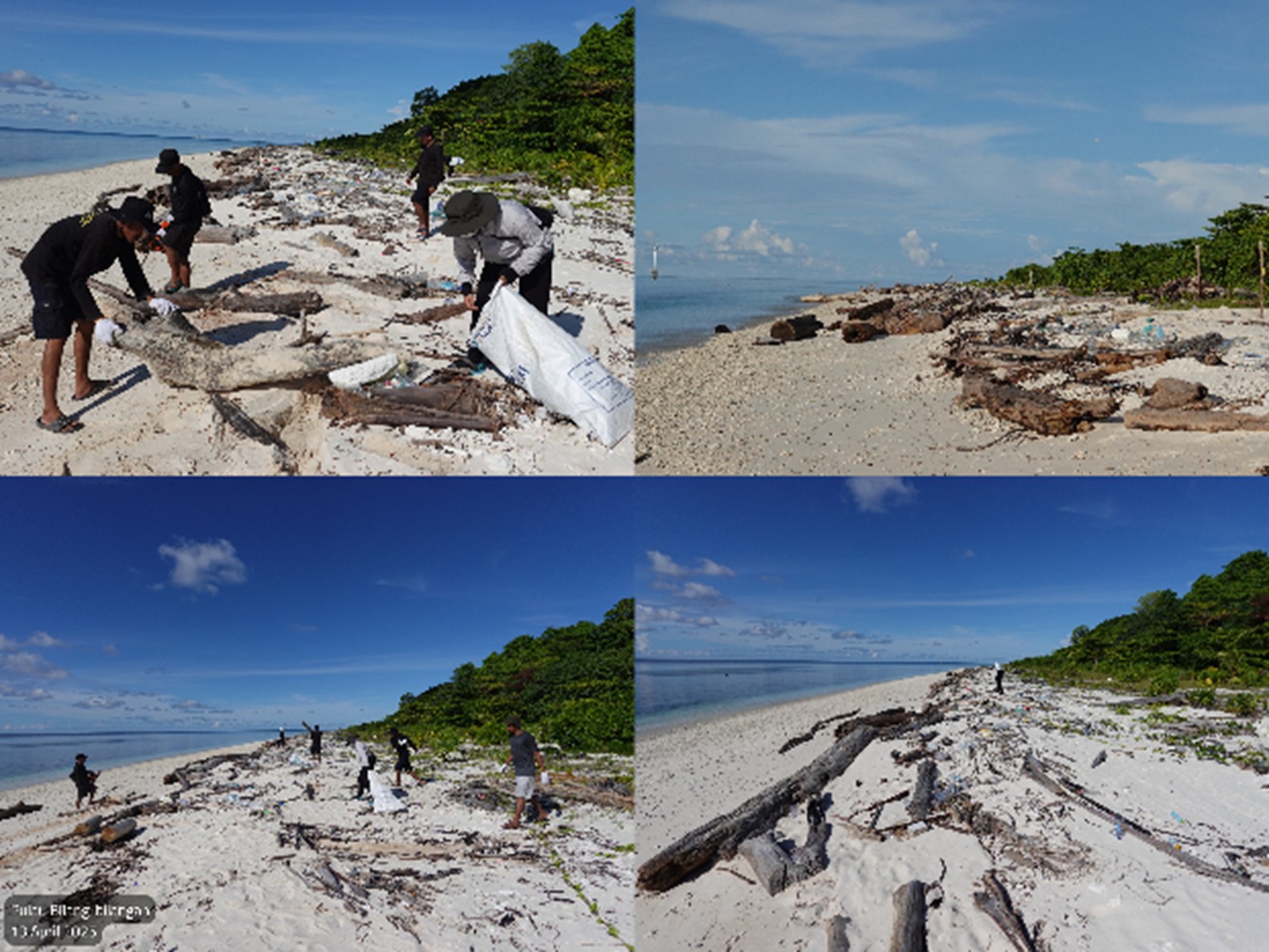
Driftwood cleanup process on Bilang-bilangan Island.

