
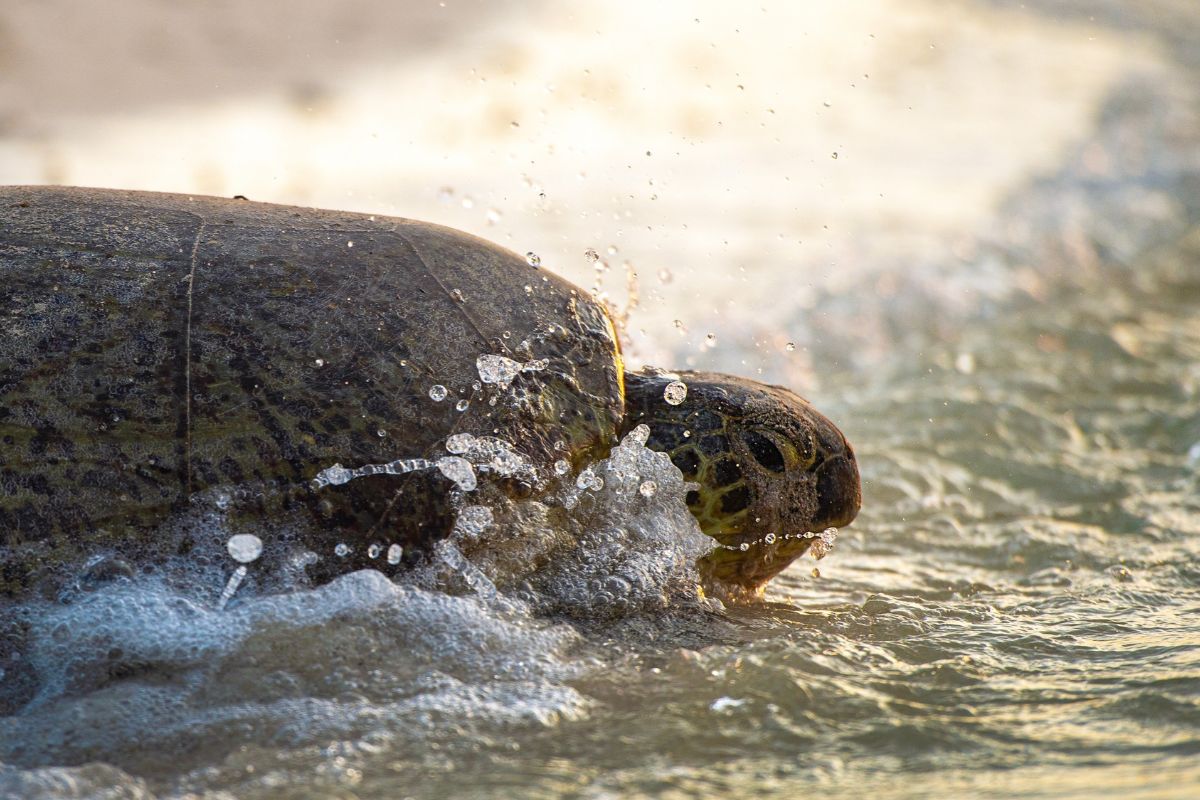
Sea turtles spend most of their life cycle in the ocean. However, female sea turtles return to the beaches where they were born to lay their eggs and continue the life cycle of their species. This journey from the ocean to the shore is not merely part of their life cycle; it is also an extraordinary process of nutrient distribution.
When sea turtles nest, they transport the energy and nutrients stored in their bodies to the shore through their eggs. These nutrients serve as an energy source for various organisms in coastal environments.
Sea Turtle Nests as a Source of Nutrients
Not all sea turtle eggs successfully hatch. Naturally, some eggs may fail to develop, decay, or die at various stages of incubation.
All organic matter from unhatched eggs contributes to nutrient availability in the beach environment. Furthermore, successfully hatched eggs also leave behind eggshell fragments, fluids, and other organic materials within the nest, which serve as additional sources of nutrients.
Nutrients from both unhatched eggs and the remains of the hatching process can be utilized by various organisms, ranging from natural predators and decomposing microorganisms to detritivores.
These available nutrients can also be absorbed by coastal vegetation, including plants growing around nesting areas. Therefore, sea turtle nests are not only places where a new generation of sea turtles develops but also play a role in supporting the productivity of coastal ecosystems.
Connecting Marine and Terrestrial Ecosystems
The ecological role of sea turtles does not end when hatchlings leave their nests and make their way to the ocean. Some of the nutrients from hatched eggs and residual organic materials are utilized by organisms on the beach and subsequently transferred through various interactions within the food web.
This process is part of the nutrient transfer cycle between marine and terrestrial ecosystems. Through their nesting activities, sea turtles help connect these two ecosystems.
Research on sea turtle ecology has shown that nutrients transported through nesting activities can contribute to coastal vegetation productivity and support various biological communities. The extent of this contribution may vary depending on nest density, beach characteristics, environmental conditions, and the types of vegetation growing in the surrounding areas.
Why Is Sea Turtle Conservation Important for Ecosystems?
As sea turtle populations decline, the contribution of nutrients transported from the ocean to land through nesting activities may also decrease. Over time, this could affect nutrient availability and ecological interactions within nesting habitats.
Therefore, protecting sea turtles is not just about ensuring that eggs hatch and hatchlings successfully reach the ocean. It also means preserving the ecological processes that take place throughout their life cycle.
Protecting sea turtles and their nesting habitats means helping to maintain nutrient cycles, interactions among organisms, coastal vegetation, and the overall functioning of coastal ecosystems.
Sea turtle nests are more than just places where a new generation begins. Within them, ecological processes take place that help sustain life in coastal ecosystems.

