
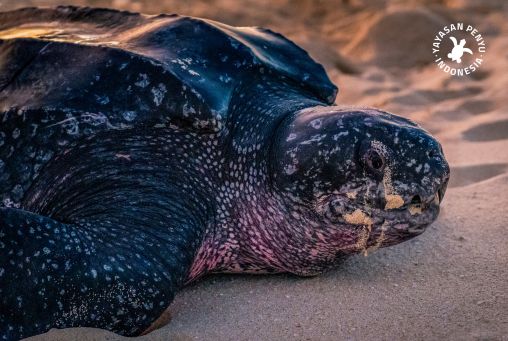
Indonesia is home to 6 of the world’s 7 sea turtle species. Four of these species are known to nest on Indonesian beaches: the green turtle, leatherback turtle, olive ridley turtle, and hawksbill turtle.
This makes Indonesia an important part of global sea turtle conservation. Yet, as the country celebrates its 81st Independence Day, sea turtles continue to face threats that put their survival and ability to reproduce at risk.
What Does Freedom Mean for Sea Turtles?
Illegal hunting and trade, habitat loss, and mass tourism continue to put pressure on sea turtle populations. These threats affect them throughout their life cycle—from the beaches where they lay their eggs to the oceans where they spend most of their lives.
The olive ridley turtle is currently classified as Vulnerable, while the leatherback and hawksbill turtles are both classified as Critically Endangered. The global conservation status of the green turtle has recently improved to Least Concern, although some of its subpopulations remain Vulnerable.
As we celebrate independence, these realities invite us to reflect on what freedom truly means.
If freedom means having the space and safety to live without threat, then sea turtles—and the many other species that share this home with us—deserve that freedom too.
The Freedom to Live and Continue Their Journey
A sea turtle’s life is a remarkable journey between the ocean and the beaches where they nest.
Female turtles return to shore to lay their eggs. After hatching, the tiny hatchlings make their way to the sea, where they face countless challenges as they grow. Those that survive may eventually return to the beaches to reproduce and continue the cycle. Male turtles, meanwhile, spend their lives in the ocean.
Every stage of this journey depends on healthy and safe habitats. When sea turtles are able to complete their natural life cycle, the ecosystems around them benefit too.
But damaged nesting beaches, uncontrolled human activity, artificial light, waste, and other disturbances can disrupt this delicate cycle. As their habitats become increasingly threatened, so do their chances of surviving and reproducing.
Protecting Sea Turtles, Protecting Our Shared Home
Sea turtle conservation is about more than protecting a single species.
Sea turtles are an integral part of interconnected marine and coastal ecosystems. By protecting nesting beaches, keeping our oceans healthy, and reducing the threats they face, we are also protecting the wider ecosystems that support countless other forms of life.
At its heart, conservation is about learning how to share our home with other species.
As Indonesia celebrates its independence, perhaps we can also expand our understanding of what it means to be free. Freedom should not belong to humans alone. It should also mean giving every living being the space and opportunity to survive, thrive, and continue its next generation without threat.
Happy 81st Independence Day!
Let us work towards freedom for all living beings that call Indonesia home.
Protect sea turtles and their habitats with Yayasan Penyu Indonesia.

