
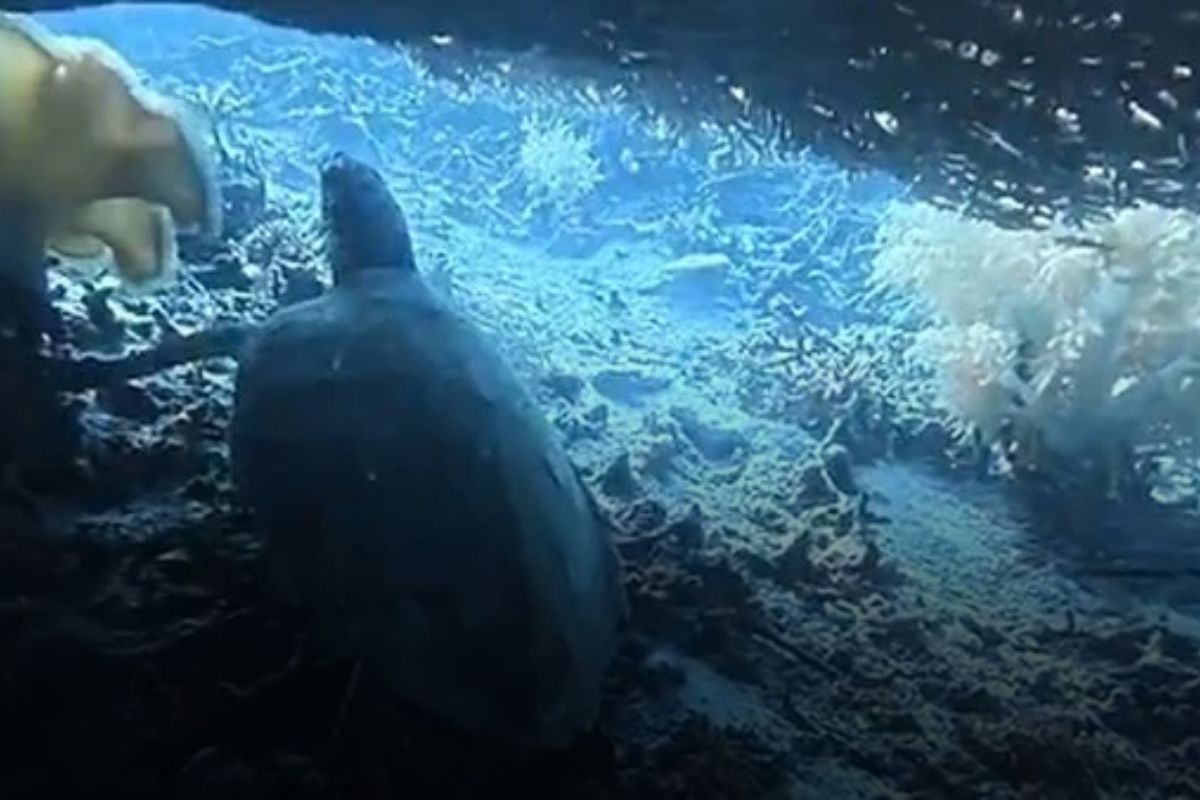
A Hawksbill Turtle (Eretmochelys imbricata) was killed after being speared by a diver using a speargun in the Raja Ampat Marine Protected Area. In a video circulating online, the turtle can be seen resting beneath a coral reef before being shot at close range. The spear pierced its neck, causing the turtle to struggle to swim away, but it did not survive.
The incident sparked widespread public outrage and prompted authorities to investigate the suspected perpetrator, a Chinese tourist reportedly identified as a certified diving instructor. The suspect was reportedly intercepted in Makassar before being taken to the Sorong Immigration Office for further examination.
It is deeply troubling that another individual from an endangered species has lost its life due to human actions. The Hawksbill Turtle is classified as Critically Endangered (CR) on the IUCN Red List. With populations facing increasing pressure, every individual plays an important role in the species’ survival.
Every Individual Matters
Based on monitoring data from Yayasan Penyu Indonesia (YPI), covering 10 nesting beaches with a combined length of approximately 28 km, only 75 Hawksbill Turtle nests were recorded over the past year. This is the lowest number among the sea turtle species monitored across YPI’s project sites.
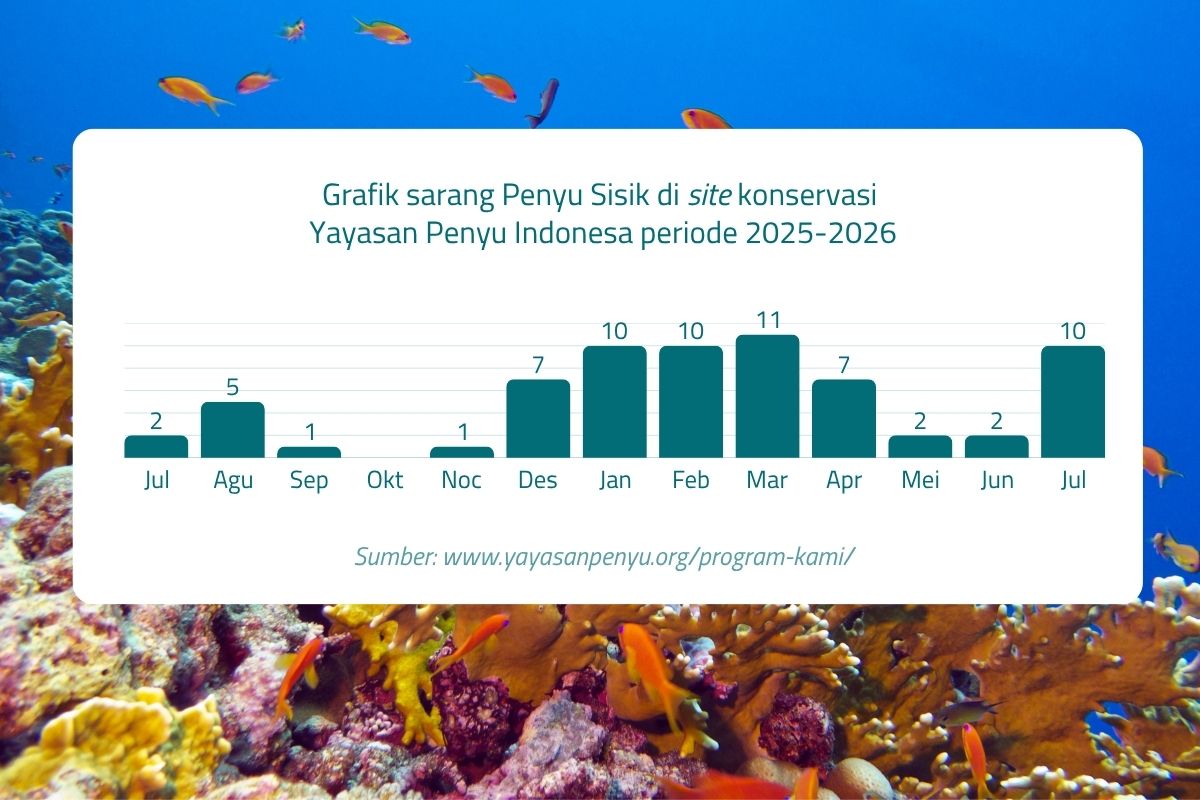
Indonesia is an important habitat for Hawksbill Turtles. Its waters provide essential habitat, while nesting beaches across the country serve as places where female turtles return to lay their eggs and produce the next generation.
However, their journey to adulthood is far from easy. It is estimated that only around one in 1,000 hatchlings survives to adulthood.
These natural challenges are further intensified by human activities, including:
- Hunting turtles for their shells, which are used to make jewellery and handicrafts.
- Pollution and habitat destruction in marine environments and nesting beaches.
- Unethical and irresponsible tourism activities.
- The theft and illegal trade of turtle eggs, as well as the slaughter of turtles for consumption.
The incident in Raja Ampat reminds us that threats to sea turtles do not come solely from habitat destruction or illegal wildlife trade. Individual actions that disregard wildlife in its natural habitat can also have fatal consequences.
Conservation Is a Shared Responsibility
Yayasan Penyu Indonesia continues to protect and monitor sea turtle nesting habitats through ranger patrols, nest monitoring, and hatchery management in accordance with the turtles’ natural life cycle.
However, conservation is not solely the responsibility of organisations or field teams. Everyone can contribute through simple actions: practising responsible tourism, avoiding disturbance to turtles in their natural habitats, refusing products made from turtle shells, avoiding the purchase or consumption of turtle eggs and meat, and spreading awareness about the importance of sea turtle conservation.
The death of one individual may seem insignificant in the vastness of the ocean, but for an endangered species, every loss matters.
It is time we learned to share our living spaces with wildlife. Their survival also depends on the choices and actions we make today.

